Pre-alpha · simulation backend working · 3D front end moving to Unreal Engine
Train the radio net. Not just the drill.
ERTNet is a fully offline AI radio simulator for emergency-response training.
Trainees speak on their own handheld radios. A crew of AI personas answers over the radio in real time, a physics and physiology engine decides what happens, and every transmission is logged for the debrief. Nothing leaves the room.
“Entry Control, Team One. Lowest pressure one-eight-zero bar. Conditions deteriorating at the access.”
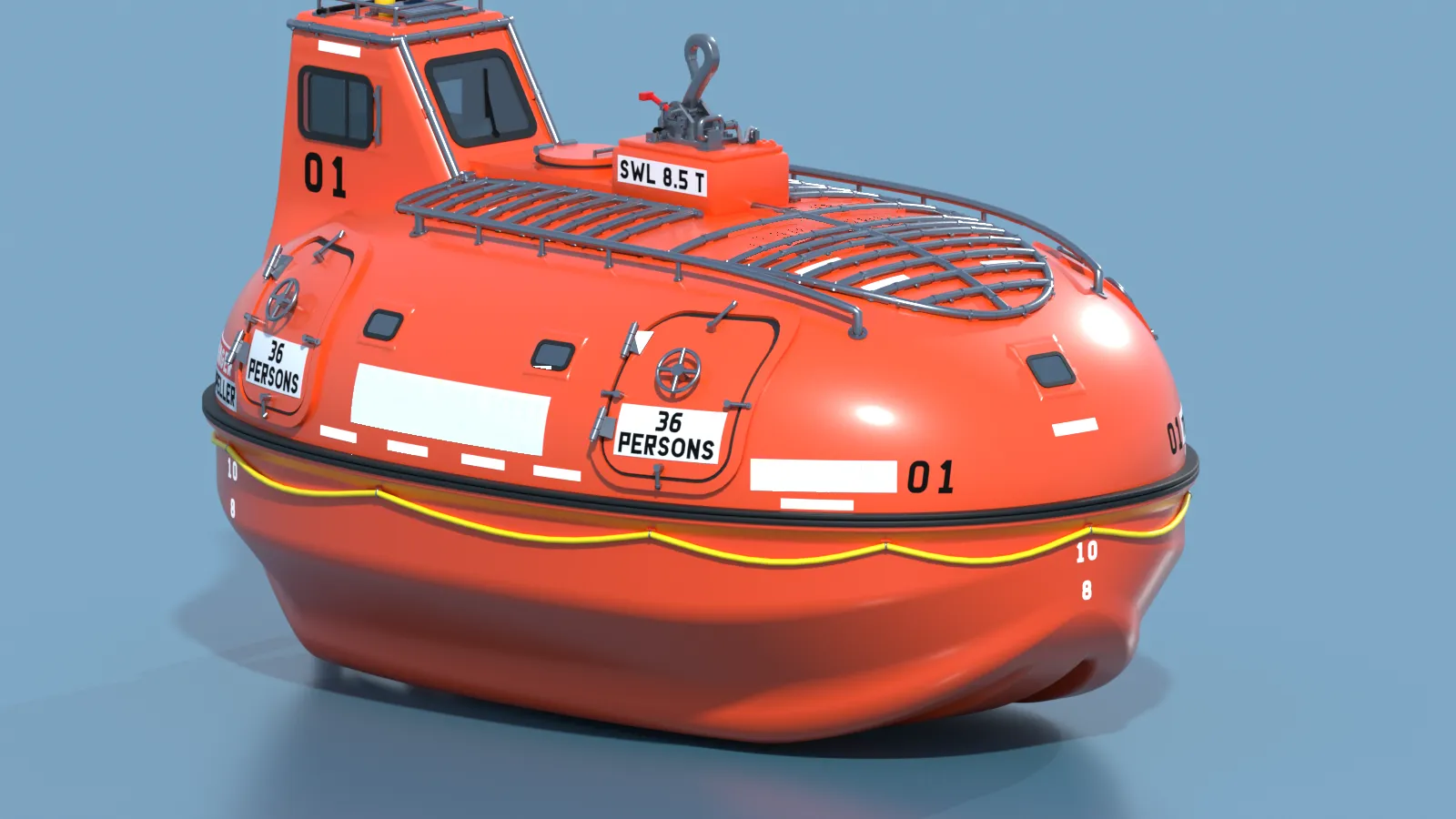
A 36-person enclosed lifeboat modelled for the worldsDEVELOPMENT RENDER
OfflineNothing leaves the room
Up to 11AI crew roles per world
VHF 74Transmit proven on channel 74
BA boardFilled in from the exercise
Mar 2026Started
01 The problem
The radio net is trained least.
Emergency drills train hose work, breathing-apparatus entry and search and rescue hard. The radio net that ties them together gets the least practice.
To run it, the instructor has to improvise the Master, the Chief Engineer, the muster point and the standby team, all while watching the trainees' safety. There is no repeatable standard from one course to the next, and no objective record of who said what.
01
One instructor, many voices
Every other station on the net is the instructor improvising, while also keeping trainees safe.
02
No repeatable standard
The same scenario plays differently every time, so two courses cannot be compared fairly.
03
No objective record
The debrief relies on memory of who said what, and when.
02 Why it exists
Built by the instructor on the microphone.
Jason Archibald is a maritime emergency-response trainer and assessor. He was the instructor improvising every voice on the net, and ERTNet is the tool he wanted in that room.
Master 5 and MED 2
STCW / AMSA fire and survival
OPITO BOSIET / FOET
FTMO · FCER
Fast rescue craft
Skunk-Labs, Archie's Software Labs · Victoria, Australia
March 2026
Started alone, in the evenings and between courses, on an 8 GB MacBook Air, under the name SignalForge.
August 2026
Forked into version 2 and renamed ERTNet: Emergency Response Radio and BA Board Trainer.
September 2026
The old web and desktop screens were retired so the trainee view can be rebuilt in real 3D, and Apple Silicon was chosen for the training-room machine. The worlds were rebuilt as a full-size offshore supply vessel (MV ERGT) and an offshore fixed-leg gas platform, laid out to real design rules.
October 2026
The 3D worlds moved to Unreal Engine, running beside the simulator on one machine. Development now runs on a MacBook Pro M5 Max.
03 What ERTNet is
A radio net that answers back.
Trainees speak on their own handheld radios. ERTNet transcribes them locally, and a crew of AI personas answers over the radio in real time.
Behind the voices, a deterministic physics and physiology engine tracks breathing-apparatus air, heat and smoke spreading through bulkheads and doors, and casualty state. A safety layer forces a retreat and a MAYDAY when the numbers say a team would not survive. Every transmission and consequence is logged for an evidence-based debrief.
Nothing leaves the room: no cloud, no subscription, no internet, because training centres and vessels often have neither. Fire is the first deep scenario type; the scenario model extends to other hazards and other industries.
One exercise. Four connected layers.
The simulation stays authoritative. Each role sees only what that role should know, and every action is recorded against the same exercise timeline.
01 / HUMAN
Trainees and trainer
Trainees work the radio and the BA entry-control board. The trainer briefs, supervises, changes conditions and debriefs.
02 / WORLD
Physics and physiology
BA air, heat and smoke through bulkheads and doors, and casualty state. The safety layer forces a retreat when the numbers say so.
03 / CREW
AI crew
Local speech and language models give each role its own voice on the net, routed by role, with up to 11 crew roles per world.
04 / EVIDENCE
Debrief record
Every transmission and every consequence is logged, so the debrief works from what was actually said and done.
Radio call → transcription → crew reply → world update → safety check → log
04 Honest stage
Pre-alpha. Version 2.0.0.
The simulation backend works and has been tested on the training floor. The trainee's 3D front end is being rebuilt in Unreal Engine. Here is what is working and what is not yet done.
✓ Working
Simulation engine, physics, physiology and safety layer, tested on the training floor
Radio receive on real UHF traffic, and low-power transmit proven on VHF channel 74
AI crew personas routed by role, up to 11 crew roles per world
BA entry-control board filled in from the exercise, with the trainee confirming or correcting each line
Pressure calls rounded down to the nearest 10 bar and spoken as single figures; the AI crew challenge a wrong readback
Every transmission logged
A large automated test suite
◐ Not yet
Unreal Engine trainee front end
Finished worlds and scenarios
Larger crew models (waiting on the Mac Studio)
Independent safety review
First classroom unit and pilot
Commercial release
Current prototypes are development evidence, not deployment claims.
05 The worlds
Places laid out to real design rules.
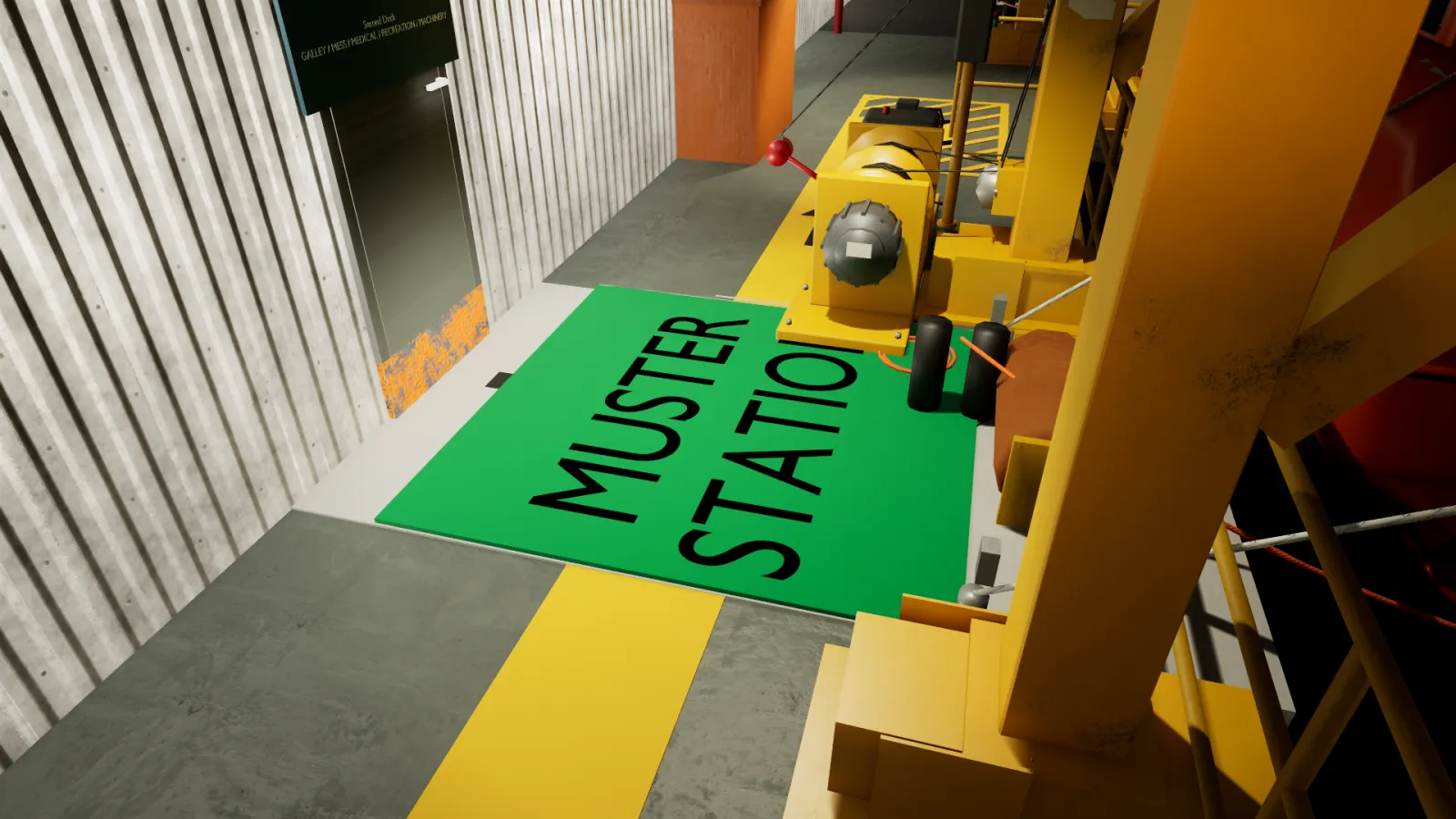
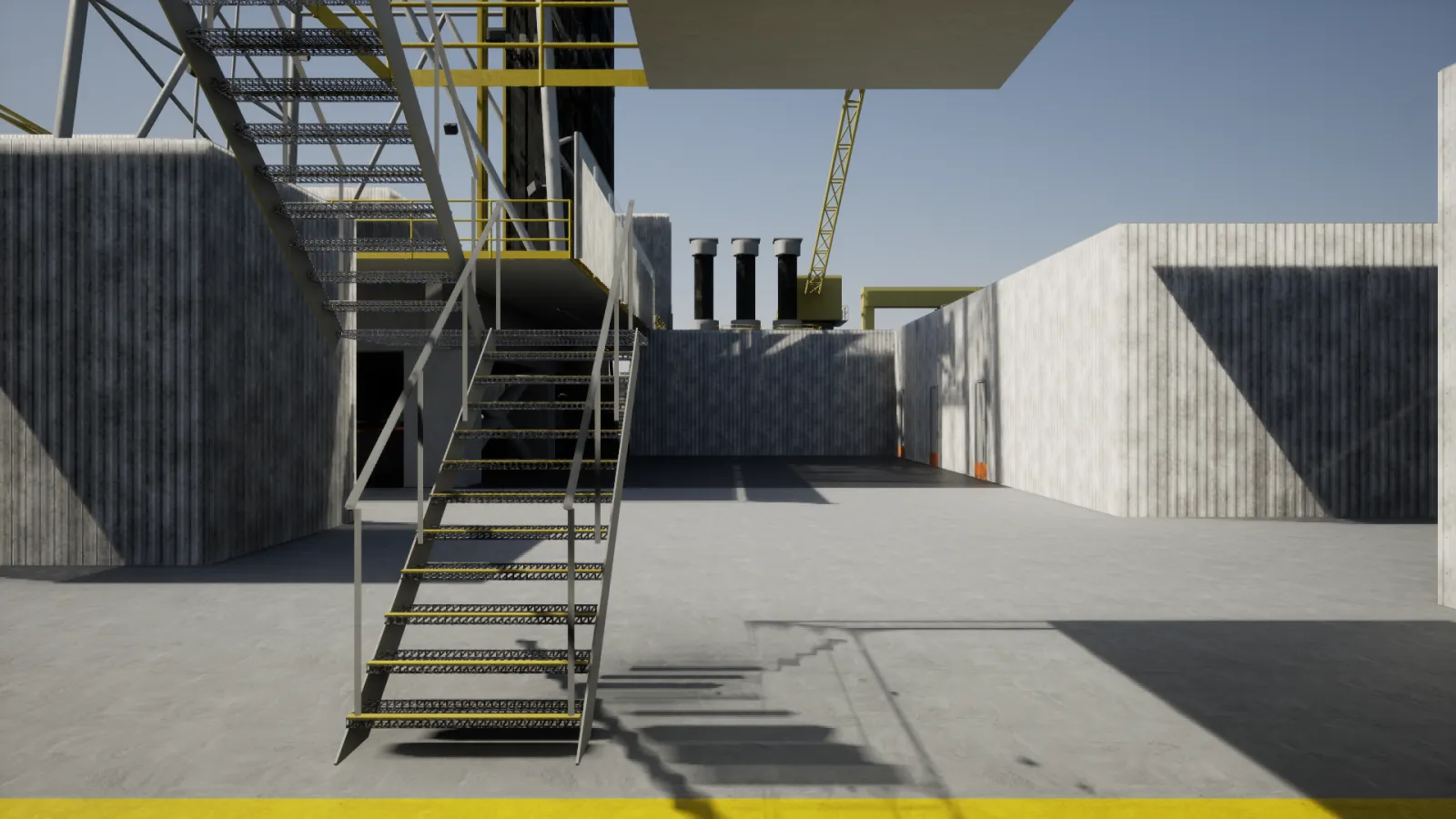
Three worlds are in development: a semi-submersible drilling rig, a full-size offshore supply vessel, MV ERGT, and an oil and gas platform on a concrete base. The same world document draws the 3D scene and tells the simulation what is burning, where the smoke goes and where the teams are. These are development frames, not finished art.
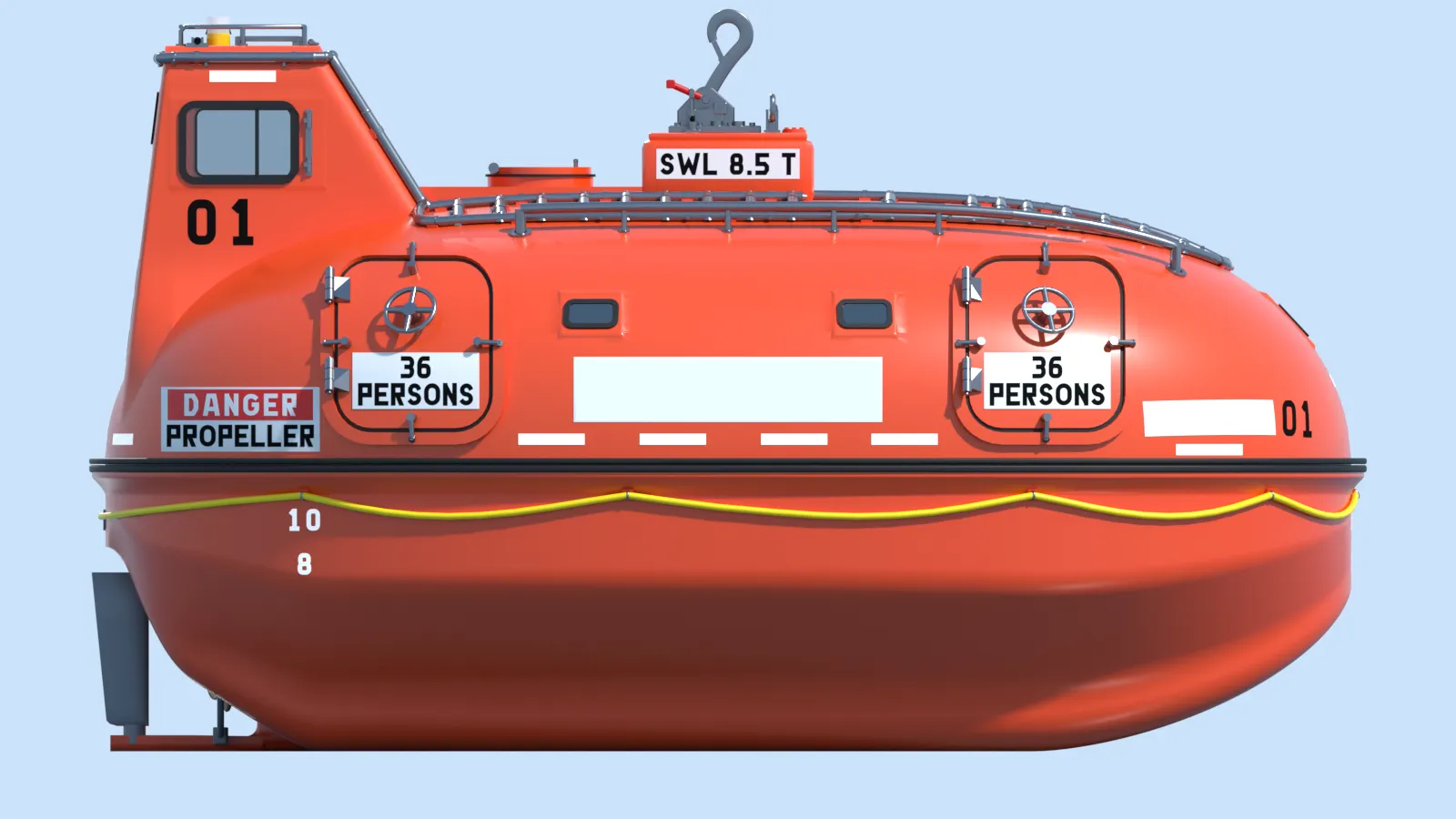
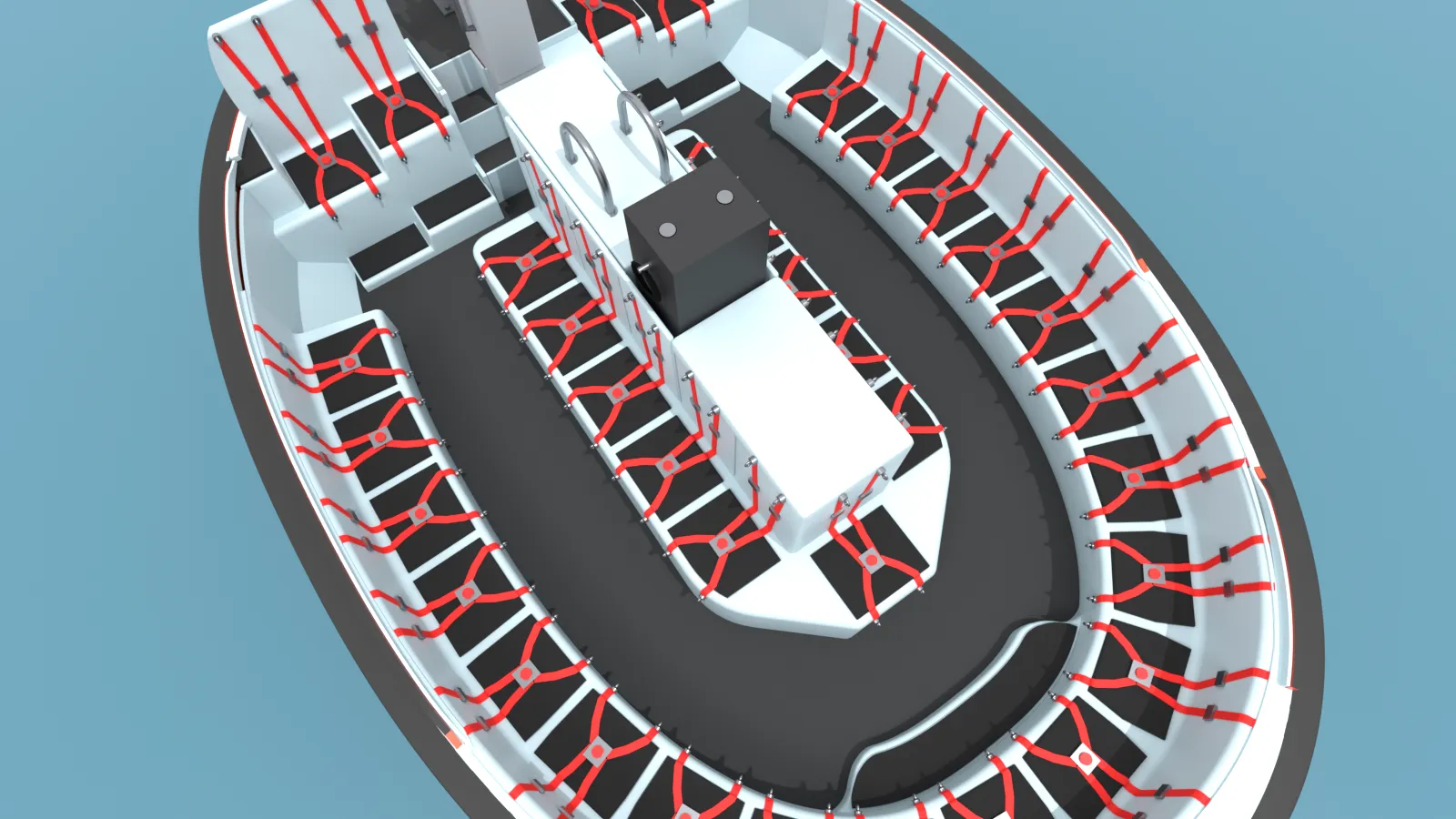
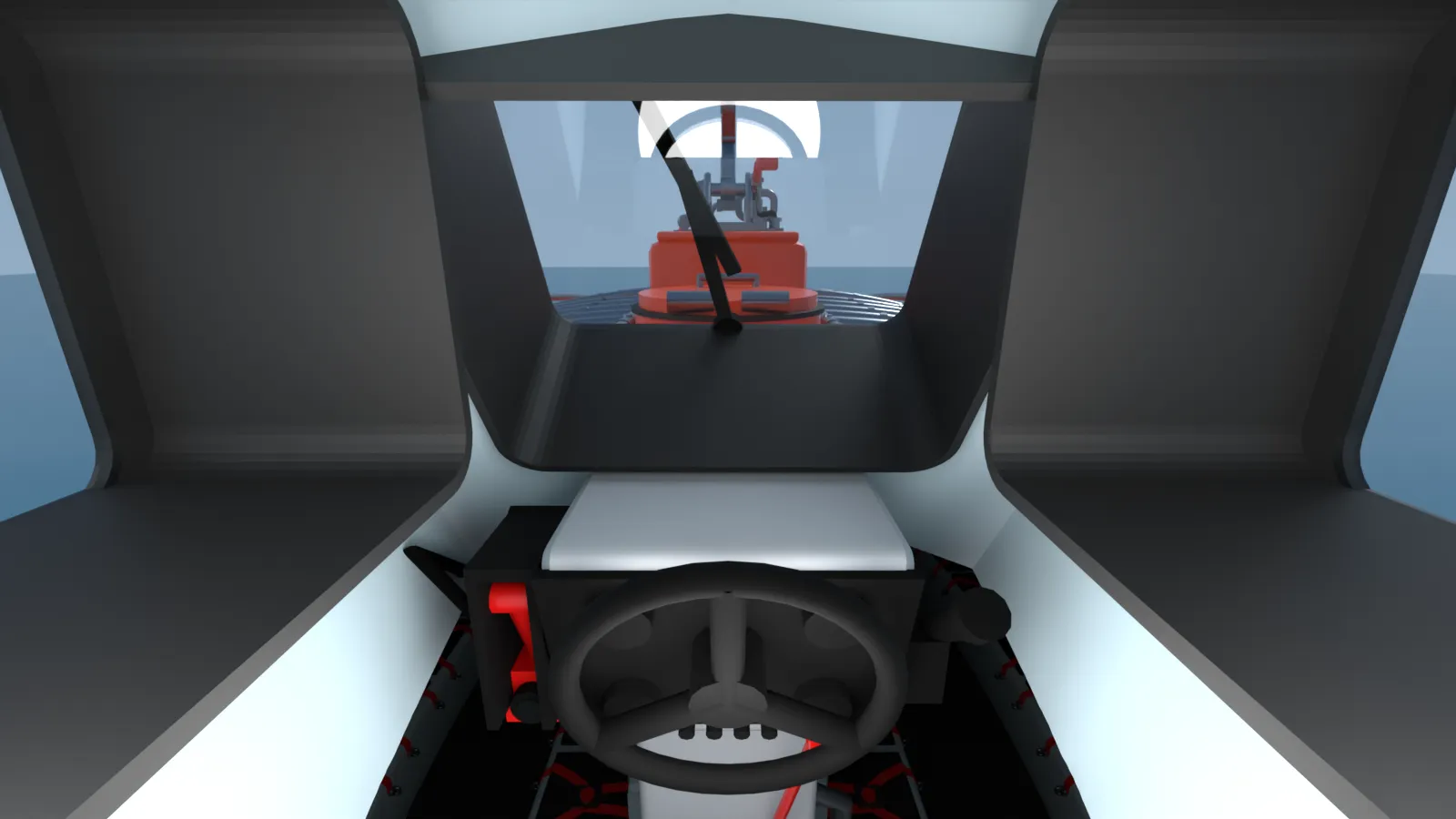
Lifeboat modelled for the worlds
Side elevationSeating, roof removedCoxswain's view from the helm
Unreal Engine development frames
Muster station on deckOpen deck and stairway, platform world
How worlds are built
Each world is laid out deck by deck: compartments, doors, stairways and fire boundaries first, then equipment and dressing. The simulation reads the same layout, so a closed door in the picture is a closed door to the smoke.
06 The road and backing
Everything is needed to finish. The classroom unit comes last.
Self-funded, the road moves at a crawl. With backers it is covered much faster, without skipping a safety check.
01
Development backend
Two Mac Studio M5 Ultra 512 GB and a MacBook Pro M5 Max 128 GB.
02
3D front end and worlds
The Unreal Engine trainee view and finished worlds and scenarios.
03
Independent safety validation
An outside review before anyone trains on it.
04
First classroom unit
One Mac Studio running everything, a radio transceiver, a trainee TV (wall or portable stand), a trainer iPad, handheld radios, and a soundbar for a live stress soundscape.
05
Pilot
Real courses, real trainees.
06
Post-deployment changes
Fixing what the pilot shows.
BACKING: NO EQUITY
Back the build.
ERTNet stays founder-owned. The build is being funded through grants, hardware sponsors (gifted or lent) and sponsorship of the documentary. No shares or ownership are offered to anyone.
What backers receive
A credit in the documentary of the build.
Named acknowledgement in the software's about screen and in project materials, in wording you approve.
A written progress update every quarter.
Early demos and early sight of results.
A direct line to the founder.
Hardware sponsors: a documented case study of your equipment in use, which you review before it is published.
ERTNet is founder-owned. No shares, ownership or investment are offered, and no offer is made on this page.